
Alveolar macrophage
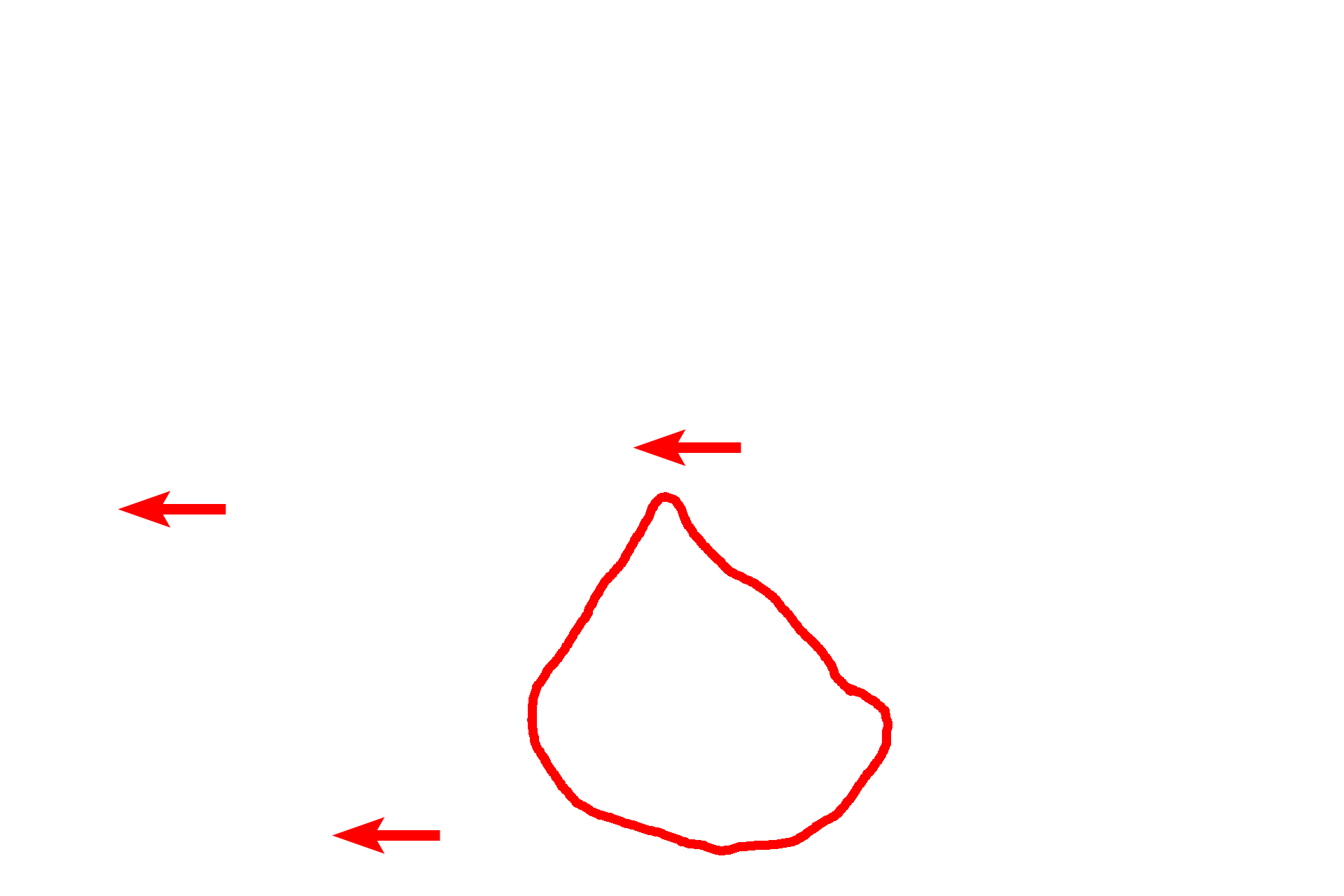
An alveolar macrophage is seen lying in the lumen of an alveolus, adjacent to the interalveolar septum. Abundant phagocytosed material is visible in its cytoplasm. The attenuated cytoplasm of the type I cells lines the interalveolar septum with its numerous capillaries. Septal cells can be identified by the vacuolated secretory granules in their cytoplasm. These granules contain lipoprotein that serves as a surfactant. 5000x

Alveolar lumens
An alveolar macrophage is seen lying in the lumen of an alveolus, adjacent to the interalveolar septum. Abundant phagocytosed material is visible in its cytoplasm. The attenuated cytoplasm of the type I cells lines the interalveolar septum with its numerous capillaries. Septal cells can be identified by the vacuolated secretory granules in their cytoplasm. These granules contain lipoprotein that serves as a surfactant. 5000x

Alveolar macrophage
An alveolar macrophage is seen lying in the lumen of an alveolus, adjacent to the interalveolar septum. Abundant phagocytosed material is visible in its cytoplasm. The attenuated cytoplasm of the type I cells lines the interalveolar septum with its numerous capillaries. Septal cells can be identified by the vacuolated secretory granules in their cytoplasm. These granules contain lipoprotein that serves as a surfactant. 5000x

Interalveolar septum
An alveolar macrophage is seen lying in the lumen of an alveolus, adjacent to the interalveolar septum. Abundant phagocytosed material is visible in its cytoplasm. The attenuated cytoplasm of the type I cells lines the interalveolar septum with its numerous capillaries. Septal cells can be identified by the vacuolated secretory granules in their cytoplasm. These granules contain lipoprotein that serves as a surfactant. 5000x

- Type I cells
An alveolar macrophage is seen lying in the lumen of an alveolus, adjacent to the interalveolar septum. Abundant phagocytosed material is visible in its cytoplasm. The attenuated cytoplasm of the type I cells lines the interalveolar septum with its numerous capillaries. Septal cells can be identified by the vacuolated secretory granules in their cytoplasm. These granules contain lipoprotein that serves as a surfactant. 5000x
- Type II cells
An alveolar macrophage is seen lying in the lumen of an alveolus, adjacent to the interalveolar septum. Abundant phagocytosed material is visible in its cytoplasm. The attenuated cytoplasm of the type I cells lines the interalveolar septum with its numerous capillaries. Septal cells can be identified by the vacuolated secretory granules in their cytoplasm. These granules contain lipoprotein that serves as a surfactant. 5000x

- Capillaries
An alveolar macrophage is seen lying in the lumen of an alveolus, adjacent to the interalveolar septum. Abundant phagocytosed material is visible in its cytoplasm. The attenuated cytoplasm of the type I cells lines the interalveolar septum with its numerous capillaries. Septal cells can be identified by the vacuolated secretory granules in their cytoplasm. These granules contain lipoprotein that serves as a surfactant. 5000x

-- Endothelial nuclei
An alveolar macrophage is seen lying in the lumen of an alveolus, adjacent to the interalveolar septum. Abundant phagocytosed material is visible in its cytoplasm. The attenuated cytoplasm of the type I cells lines the interalveolar septum with its numerous capillaries. Septal cells can be identified by the vacuolated secretory granules in their cytoplasm. These granules contain lipoprotein that serves as a surfactant. 5000x
Air-blood barrier >
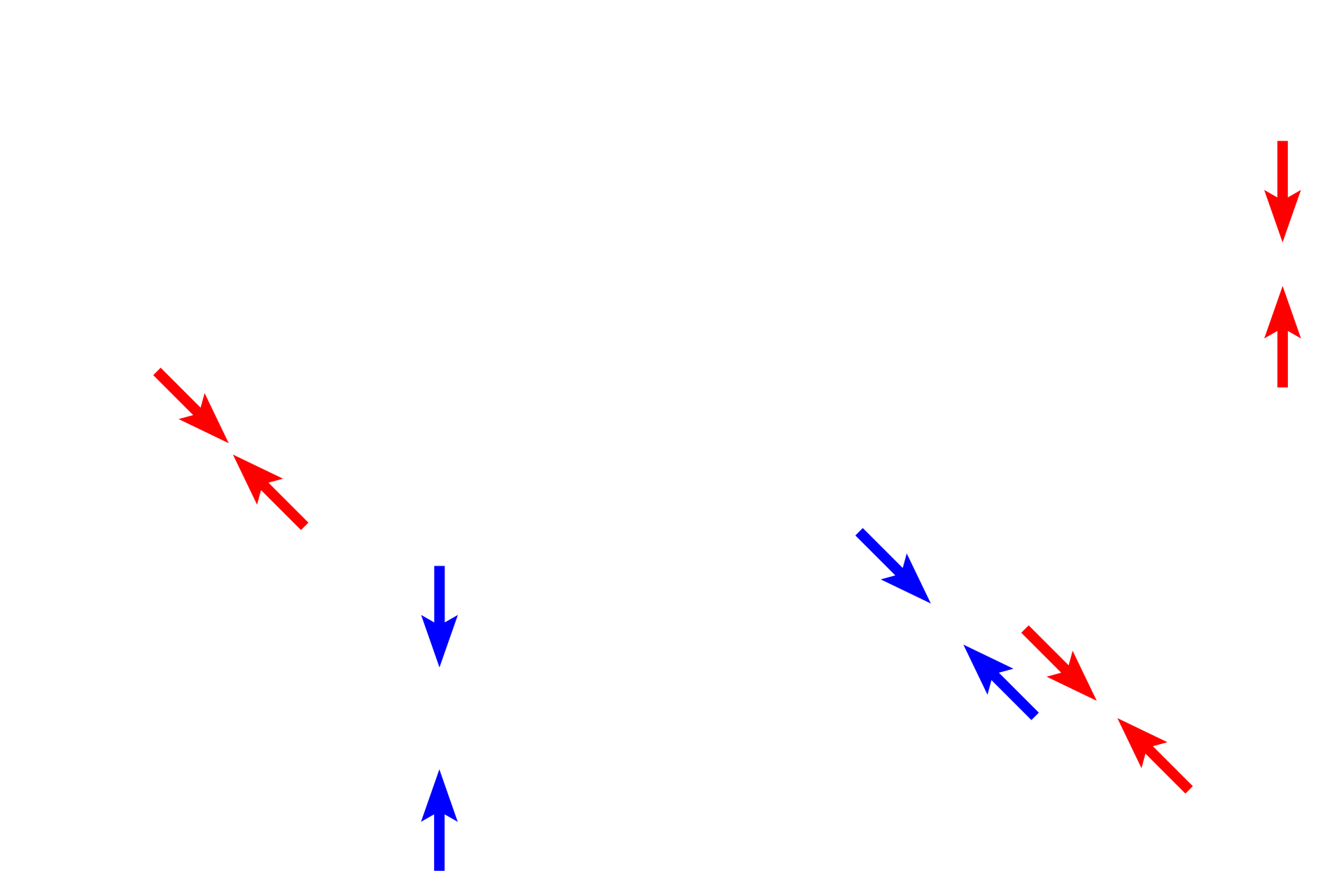
The tissue separating the blood from inspired air forms the air-blood barrier and has two portions, thin (red arrows) and thick (blue arrows). Most of the gas exchange occurs in the thin portions, which consists of the endothelium, type I cell and their fused basal laminae. Thick portions, which contain intervening connective tissue cells and fibers, provide support and fluid clearance.
 PREVIOUS